
A lesson in Social Anthropology (and company culture)
A family trip to Marrakech helped us at Pala to remember the connection we can find amongst the chaos
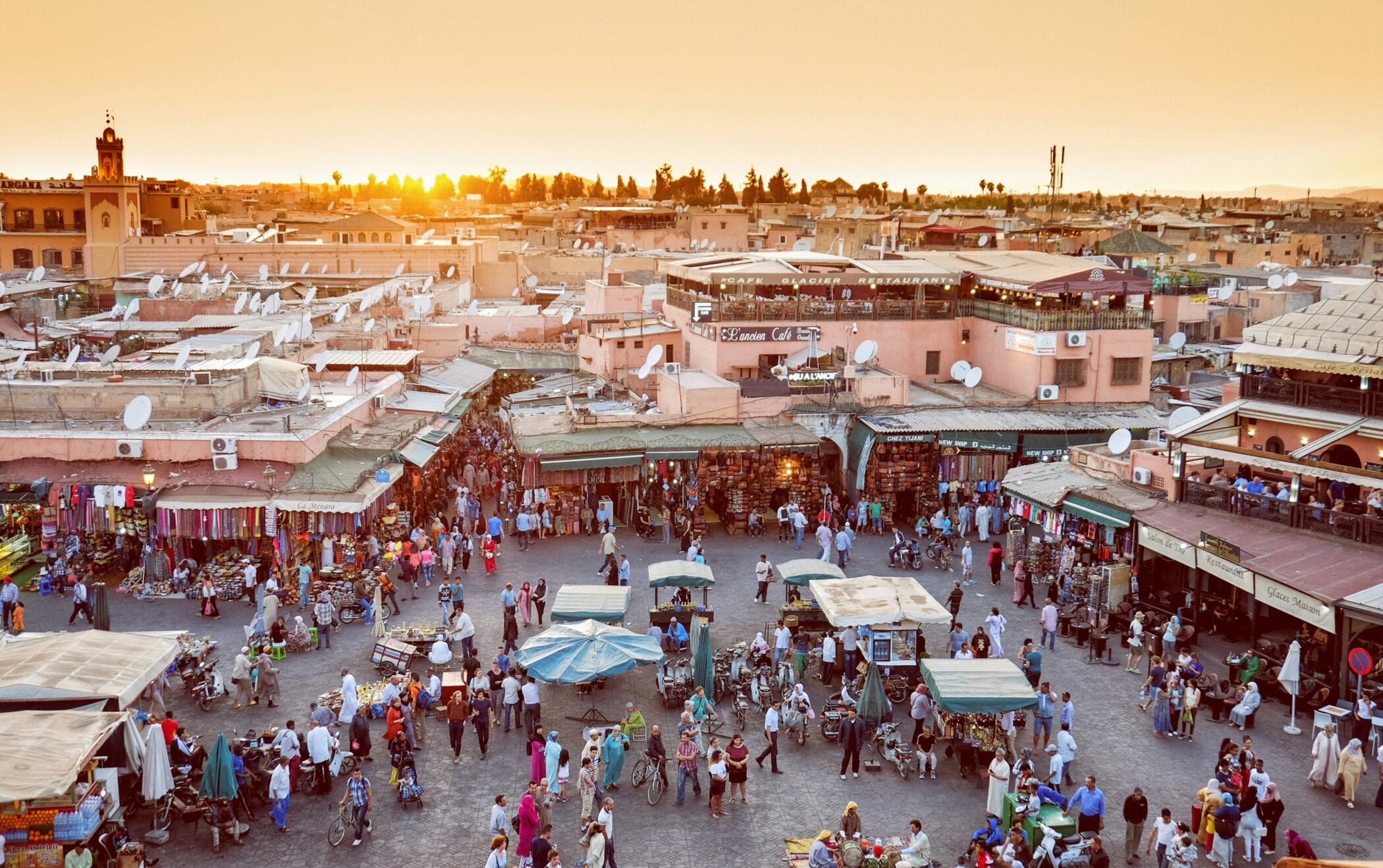
As we fly back from a long family weekend in Marrakesh, Morocco, I feel rejuvenated, inspired and with a surprising number of reminders and lessons about social systems and how we humans organise ourselves in life and work.
The last few months, I’ve been going through the motions a bit. Finding life and work hard at times. And yet, I’ve had nothing to point to or to blame my sense of unsatisfactoriness on. Business is alright, love is good, family is well, health is good. I’ve felt a sort of mild existential angst. The sense that something is missing but not sure what.
On getting into our taxi from Marrakesh Airport and into the Medina (old town), this lifted almost immediately. The drivers use their horns as a sonar equivalent of an indicator, the lines on the road are optional guidelines rather than strict rules, virulent expressions of peer to peer discontent is the norm.
As we arrive in the Medina it’s December, it’s cold, wet, muddy and there are smells of spices and less pleasant things….and within 30mins I feel so so so alive!
And I realise… What I’ve been missing… is two things:
1) Chaos
2) Connection
An illusion of order
Our society has become so structured, technology has created so much ease, and organisational bureaucracies have become so ‘normal’ that we don’t even notice we are in them. We have created these kind of sanitised structures as substitutes for living social systems. We are governed by processes, policies and procedures.
Rather than popping over to a colleague’s desk or picking up the phone, we send each other diary links. Rather than argue about a piece of creative work or a project, we have a plan and a process for that too. In order to maintain an illusion of control, we have removed all friction.
We think we’re creating order but really it’s sterility.
We struggle to see the opportunity costs we pay such as human relationships, creativity, trust and serendipity as an emergent property of resilient social networks. We want to get rid of all conflict and lack the wisdom to see that friction is the fire to our forge.
The human element
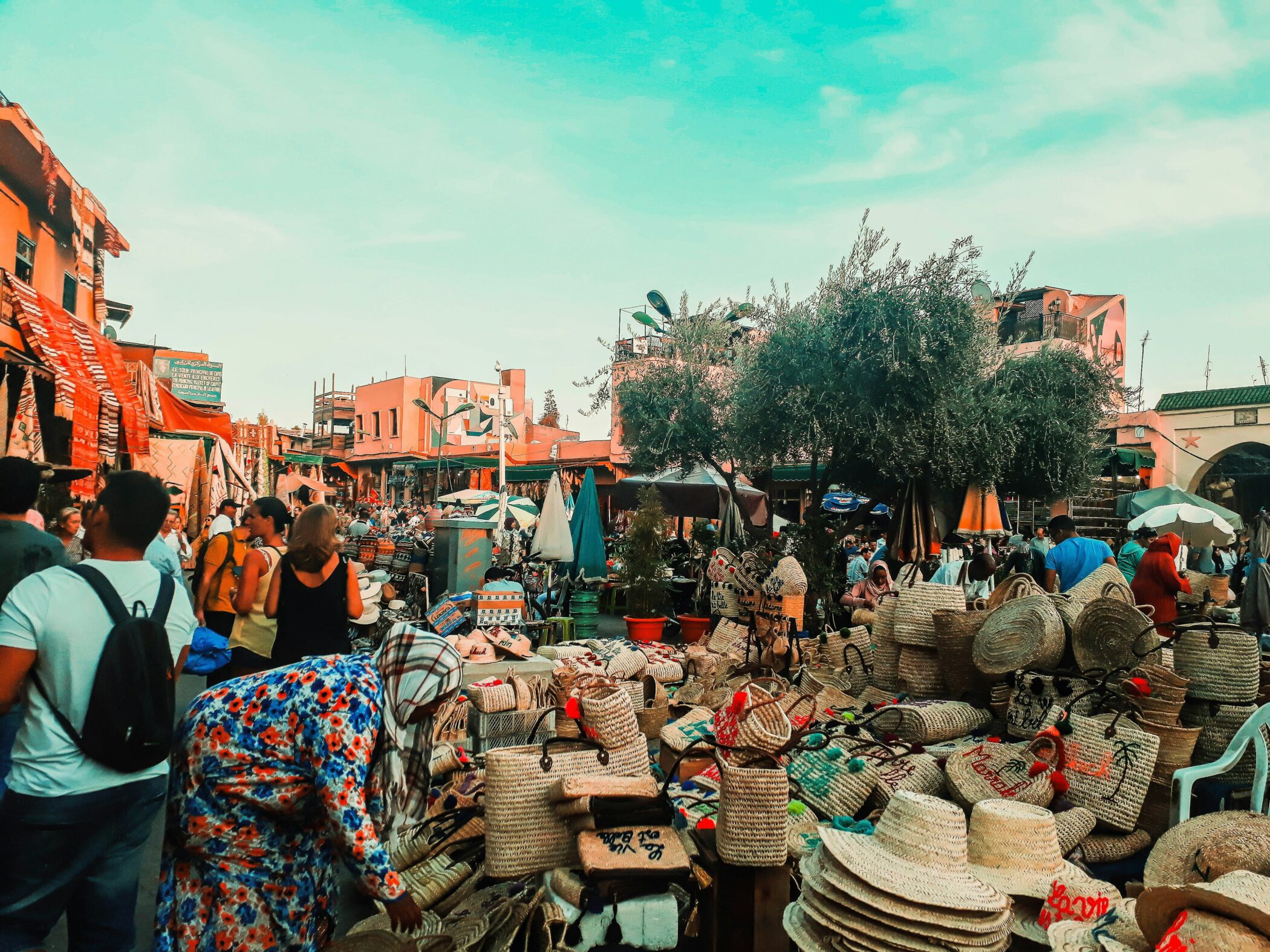
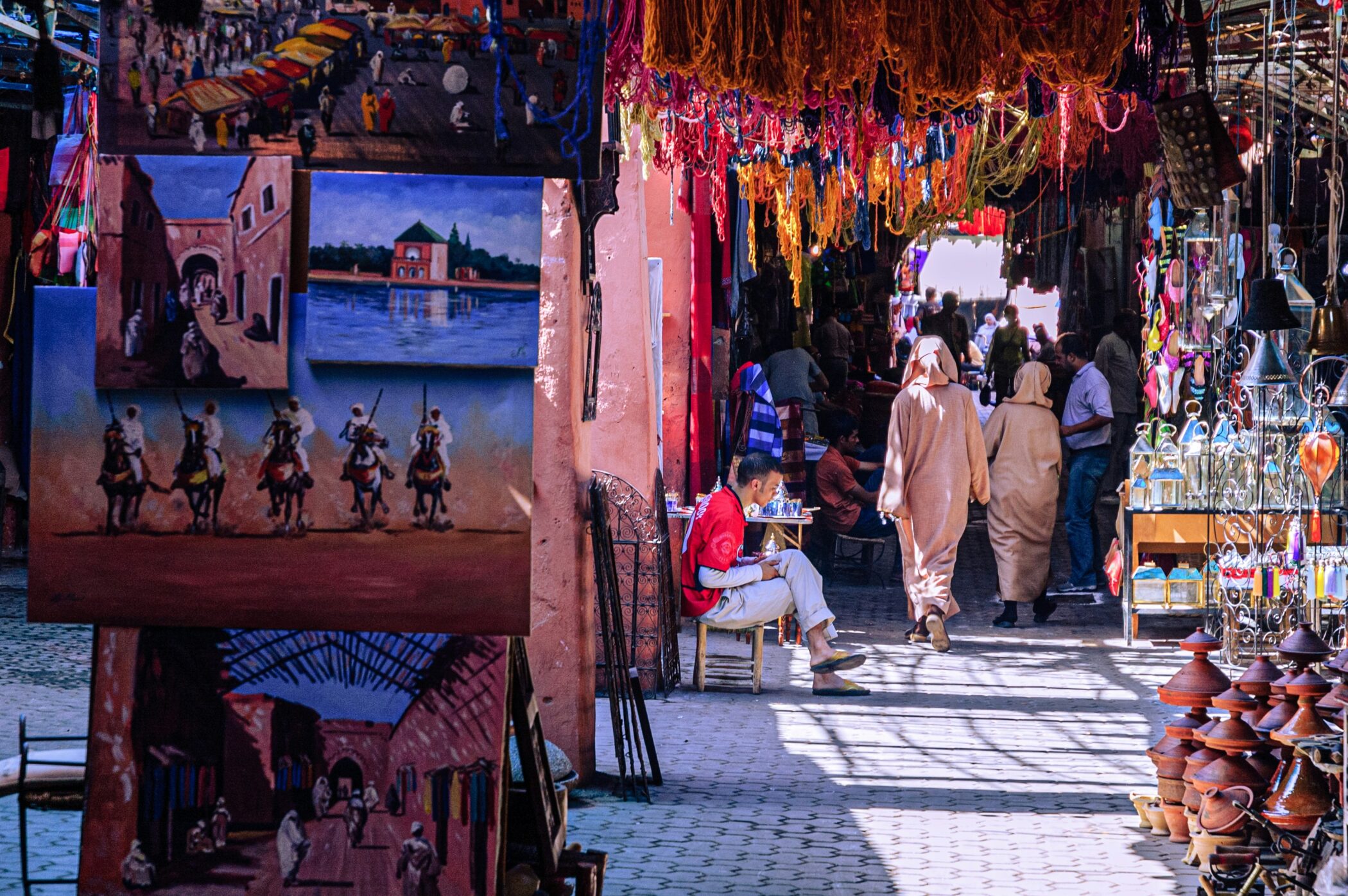
As we spend these days walking through the messy Medina, it’s clear that this isn’t just a market. This is an organic mycelial network of distant relatives, colleagues, friends, family who exchange, support, collaborate and compete.
The smartphone has no doubt changed things. The call to prayer – which blares out the speakers surrounding the mosques – is I’m sure less adhered to than in previous times. Traditional robes aren’t quite as ubiquitous as once upon a time. But you also get a sense that not much has changed. That the underlying root system of this little forest is deeply embedded, alive and resilient.
I ask myself what my equivalent at work is and a comically dark thought comes to mind: LinkedIn! Of course this isn’t the case, but the thought is funny.
The bartering for items, is a good natured game reminiscent of Life Of Brian (Monty Python) and is far less easy but far more connecting than clicking ‘Buy Now’ in my Amazon Prime account. The mopeds and pedestrians co-exist and self-correct without the need for conscious thought. Sentences blend Arabic, Berber, French and English into their own fusion dialect.
As we meander along the cobbled Souks we arrive at Jemaa el-Fnaa Square, the cultural epicentre of the city. In our Lonely Planet I read that this is a UNESCO recognised ‘Museum of Intangible Heritage’. Amazing. A place that is recognised not because of tangible ‘stuff’ (like architecture, pretty buildings…) that humans have created here, but because of the circles that form every evening with local storytellers weaving their cultural yarn of conversations.
If a culture is the sum of the stories told, then this culture is alive and thriving in a beautiful, beautiful way.
The cost of efficiency
I wonder what have we lost in our company cultures? Ever since Frederick Taylor gave us Scientific Management and Henry Ford gave us Fordism with his black car in Detroit, our pursuit of ‘efficiency’ through our reductionist lenses has stripped our understanding of organisational culture down to the single 0-10 Likert Scale question: “How likely are you to recommend this workplace to a friend?”.
WTF…?! Really?!
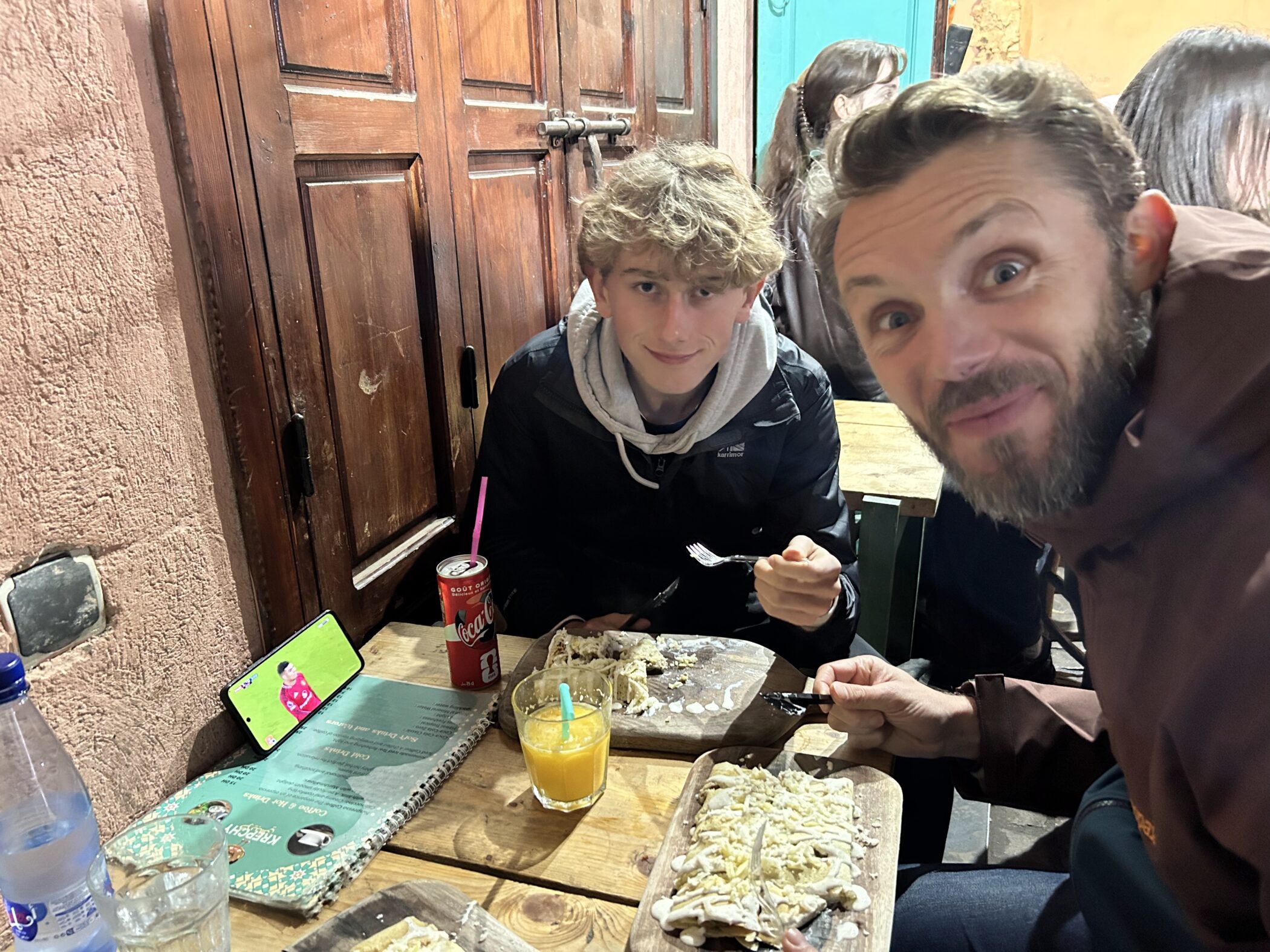
On our penultimate night, I search on my phone for a place to watch a live Manchester Utd football match with some local football fans but find nothing. I ask our Riad receptionist too but no luck. So we go out into the muddy streets to grab a quick pancake only to strike up a serendipitous conversation in French with the young man working there. He takes off his jumper to show me his fake Manchester Utd top. We high five and he hands me his smartphone after finding an illegal streaming site. We sit in the streets laughing with him, watching the game in what is strangely enough, the authentic way locals seem to watch the beautiful game.
My 15yr old son is open eyed to see how human interactions lead to luck and how being open hearted with strangers leads to great experiences and memories beyond what an algorithmic search could ever provide.
Culture is a living system
So I fly home with my existential angst lifted. I remember my days hitch-hiking and backpacking rough and how alive I felt. I remember the cost I pay for over structure and that we must sometimes ‘let chaos reign before we reign in chaos’.
This trip has been a reminder that engaging in culture change is not to engage in a hard science with tried and tested tools, but to engage in social anthropology. A field that requires an attitude of curiosity about the only category of messy mammals that is tricked by its own minds into believing it can out-evolve its own nature through advancements in social technologies. A form of Homo Economicus Fallacy applied to the workplace that we would benefit from loosening our grip on if we truly want to flourish.
So this trip has been beautiful for me. I feel reconnected to what it means to be a person and to the beauty that emerges from acknowledging and even revelling in the perspective that culture is an organic system, not a hydroponic endeavour.
To embracing the chaos.
Sukran.
More epic articles...
A realist’s guide to self-management in the workplace
A practical take on ditching outdated 'command-and-control' for real workplace agency—without letting chaos reign.
Read more
Pala Podcast: Self-management & Leadership Buffets with Matthias Hoffman
Welcome to our podcast with guest Matthias Hoffman
Read more